Best Carpet for Allergies NZ | Wool, Nylon & Allergy-Friendly Options
The best carpet for allergies is one that is easy to clean and suits the household’s specific triggers. Low, dense or tight-loop wool and durable solution dyed nylon are practical options. For shoppers wanting a carpet with specific allergy-friendly credentials, Rhino Hudson is endorsed by Allergy New Zealand. Regular vacuuming, moisture control and good ventilation still matter.
Quick answer: The best carpet for allergies is one that is easy to clean and suits the household’s specific triggers. Low, dense or tight-loop wool and durable solution dyed nylon are practical options. For shoppers wanting a carpet with specific allergy-friendly credentials, Rhino Hudson is endorsed by Allergy New Zealand. Regular vacuuming, moisture control and good ventilation still matter. |
|---|
Carpet does not need to be automatically ruled out in an allergy-conscious home. The better question is which carpet construction is easiest to maintain, which fibre suits your lifestyle, and how the whole room is managed. In New Zealand homes, wool and solution dyed nylon can both work well, while selected carpets add specific allergy-friendly features or endorsements.
In this guide
- Is carpet actually bad for allergies?
- What should you look for in carpet if you have allergies?
- Is wool carpet good for allergies?
- Is solution dyed nylon good for allergies?
- Which Carpet Court carpets are worth considering?
- Does pile height matter for allergies?
- What carpet works well for pet allergies?
- How should you clean carpet in an allergy-conscious home?
- Wool vs synthetic carpet: which should you choose?
- Frequently asked questions
Is Carpet Actually Bad for Allergies?
Carpet is not automatically “bad” for allergies, but it does need effective cleaning and moisture management. Carpet can hold settled dust, pollen, pet dander and other particles in its fibres until they are removed by vacuuming, so the way a carpet is constructed and maintained matters as much as the fibre itself.
That is why broad claims that all carpet worsens allergies, or that one fibre is universally best, are too simple. A lower or tighter pile may be easier to vacuum thoroughly than a deep, loose pile, while household ventilation and humidity can affect the wider indoor environment. If asthma or allergies are severe, or if a person has known triggers, flooring should be considered alongside advice from a healthcare professional.
What Should You Look for in Carpet if You Have Allergies?
For an allergy-conscious home, prioritise a carpet that is easy to vacuum, straightforward to maintain and appropriate for the way the room is used. Fibre matters, but pile construction, moisture exposure, pets, foot traffic and cleaning habits can have just as much influence on day-to-day practicality.
- A low, dense or tight-loop construction that is easier to vacuum thoroughly.
- A fibre with practical stain and soil resistance for your household.
- A carpet that suits the room’s moisture conditions and level of foot traffic.
- Clear care instructions so the correct vacuum head, cleaning products and professional-cleaning method are used.
- Specific allergy-friendly product credentials where that is important to your decision.
There is no single “best carpet for allergy sufferers” for every household. A family with pets may prioritise stain resistance and easy cleaning, while a household wanting a natural fibre may prefer a tightly constructed wool carpet.
Is Wool Carpet Good for Allergies?
Wool carpet can be a strong option for allergy-conscious households, particularly when it has a lower, denser or tight-loop construction. Wool also brings familiar benefits for New Zealand homes: it is a renewable natural fibre, feels warm underfoot and is naturally insulating.
The trade-off is that wool is not automatically the easiest choice for every home. It can require more careful stain treatment than a performance synthetic and should be kept dry and maintained according to the manufacturer’s instructions. If easy-care performance is the first priority, solution dyed nylon may suit better. If natural material, comfort and insulation matter most, wool is well worth comparing in store.
Carpet Court wool options to compare:
- Bremworth Kensho — a low, tight loop-pile wool carpet listed by Carpet Court as allergy friendly and suitable for stairs.
- Bremworth Aoraki — a textured wool loop carpet in versatile neutrals, also listed as allergy friendly.
- Bremworth Levante — a family-friendly, hard-wearing wool loop with honeycomb patterning and allergy-friendly listing.

Is Solution Dyed Nylon Good for Allergies?
Solution dyed nylon is a practical option for allergy-conscious homes when easy cleaning, durability and stain resistance are high priorities. The fibre is widely used in busy family homes because it is hard-wearing, colourfast and available in many constructions, including lower-profile carpets that are straightforward to maintain.
Solution dyed nylon is still not a substitute for regular cleaning. Dust, pollen, dander and tracked-in debris can settle on any floor surface, so the useful question is how easily the chosen carpet can be vacuumed and cleaned. For homes with children or pets, the combination of robust fibre and stain resistance can make everyday maintenance simpler.
Carpet Court synthetic options to compare:
- Godfrey Hirst Alabama — a solution dyed nylon cut-pile twist. Carpet Court describes its fibre as non-porous and odour resistant, making it a practical option for homes with pets and kids.

Which Carpet Court Carpets Are Worth Considering?
The most useful shortlist compares fibre, construction and allergy-friendly credentials side by side. Rhino Hudson stands out for shoppers who want an explicit allergy-related endorsement, while Bremworth wool options suit people prioritising a natural fibre and tight-loop construction. Solution dyed nylon options suit households that put easy-care durability first.
Carpet | Fibre / style | Why consider it | Best suited to | Key trade-off |
Rhino Hudson | NanoStrand® cut pile | Allergy New Zealand endorsement; antimicrobial technology; stain and fade resistance | Busy homes wanting specific allergy-friendly credentials | Plusher cut pile than the low/tight-loop options |
Bremworth Kensho | Wool, low tight loop | Allergy-friendly listing; low, tight construction; natural fibre | Homes prioritising wool and easier vacuuming | Wool needs fibre-appropriate stain care |
Bremworth Aoraki | Wool loop | Allergy-friendly listing; textured natural wool | Natural-fibre homes wanting visible texture | Texture may not suit every cleaning preference |
Bremworth Levante | Wool loop | Allergy-friendly listing; hard-wearing family-oriented design | Families wanting wool with durability | Wool can require more careful spill treatment |
Godfrey Hirst Alabama | Solution dyed nylon cut pile | Durable, fade resistant and odour-resistant fibre | Kids, pets and high-use rooms | No specific allergy endorsement shown on product page |
Rhino Hudson is part of the Rhino Performance Collection. Carpet Court states that the collection is made from NanoStrand® with RhinoShield®, includes antimicrobial technology, and is endorsed by Allergy New Zealand. Hudson is therefore a useful first product to compare when allergy-friendly credentials are a deciding factor, while still offering the stain and fade resistance expected in a busy family home.

Does Pile Height Matter for Allergies?
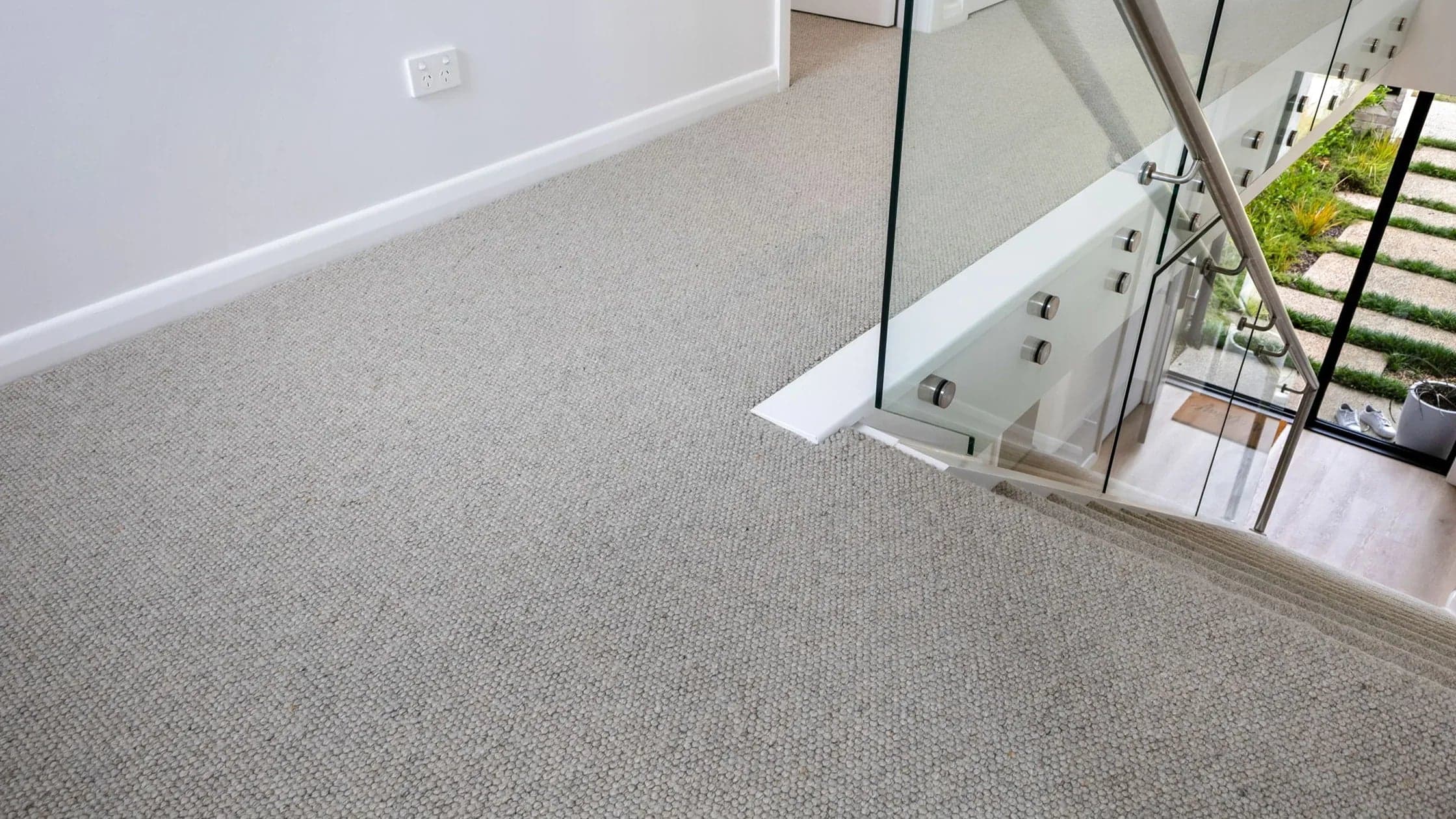
Pile construction matters because it affects how easy the carpet is to vacuum thoroughly. Lower, denser and tight-loop carpets are often a practical choice for allergy-conscious homes because there is less depth for dust and debris to settle into than in a very deep or shaggy pile.
That does not mean allergy-conscious carpet has to look flat or commercial. Textured loop products such as Kensho, Aoraki and Levante show that a tighter construction can still have softness, pattern and visual interest. The best way to judge the feel and vacuumability is to compare samples and constructions in person.


What Carpet Works Well for Pet Allergies?
For homes with pets, choose carpet that is durable, easy to clean and able to cope with tracked-in dirt as well as hair and dander. Pets can also bring pollen, dust and mud indoors on their coats and paws, so flooring performance and household cleaning routines need to work together.
Rhino Hudson is a strong Carpet Court option for this brief because it combines allergy-friendly credentials with antimicrobial technology and performance features for active homes. A durable solution dyed nylon such as Alabama can also be worth comparing where stain resistance and easy maintenance are more important than a specific allergy endorsement. Regular pet grooming and prompt spill clean-up can reduce what ends up in the carpet in the first place.
How Should You Clean Carpet in an Allergy-Conscious Home?
Consistent cleaning is one of the most important parts of managing carpet in an allergy-conscious home. The goal is to remove settled particles without damaging the carpet, so always follow the manufacturer’s care instructions for vacuum type, cleaning products and professional-cleaning methods.
- Vacuum regularly, paying extra attention to bedrooms, living areas and other high-use spaces.
- Consider a vacuum with a HEPA filter if fine-particle capture is important to your household.
- Treat spills promptly using the care method recommended for the specific carpet fibre.
- Keep bathrooms, kitchens and other moisture-prone areas well ventilated, and manage dampness rather than allowing carpet to stay wet.
- Use entrance mats and remove outdoor shoes where practical to reduce dust, pollen and grit tracked inside.
- Arrange professional cleaning when required by the carpet’s care guidance or when everyday vacuuming is no longer enough.
Carpet Court publishes warranty and product-care guides for its major brands and collections, so check the correct guide before using a new cleaning method.

Wool vs Synthetic Carpet: Which Should You Choose?
Choose wool if natural fibre, warmth and a dense or tight-loop construction are high priorities; choose solution dyed nylon if stain resistance, durability and straightforward family-friendly maintenance matter more. Neither fibre is universally better for allergies, so the best choice is the one that combines a suitable construction with cleaning habits your household can realistically maintain.
If an explicit allergy-friendly endorsement is central to the decision, Rhino Hudson is the clearest Carpet Court starting point in this shortlist. If you want a natural wool option, compare Kensho, Aoraki and Levante. If you need a hard-wearing synthetic for pets, children or high-traffic rooms, compare Alabama and other solution dyed nylon carpets.
Browse the full Carpet Court carpet collection, visit your nearest Carpet Court store, or book a free measure and quote to compare fibres and constructions in your own home.
Frequently Asked Questions
Can you have carpet if you have allergies?
Yes. Allergies do not automatically rule out carpet. Choose a construction that is easy to clean, follow the carpet maker’s care guidance and manage ventilation and moisture. Because triggers vary from person to person, anyone with significant asthma or allergies should also consider advice from a healthcare professional.
What type of carpet is best for allergies?
There is no single best carpet for every allergy sufferer. Low, dense or tight-loop carpets are practical because they are easier to vacuum thoroughly. Wool and solution dyed nylon can both work well, while products such as Rhino Hudson add specific allergy-friendly credentials through an Allergy New Zealand endorsement.
Is wool or nylon carpet better for allergies?
Neither fibre is automatically better. Wool is a natural, insulating option and is available in low, tight-loop constructions such as Kensho. Solution dyed nylon is durable, stain resistant and easy to maintain. The better choice depends on household triggers, cleaning habits, pets, foot traffic and the room being carpeted.
What is the best carpet for allergies and pets?
Look for durability, stain resistance and easy cleaning, then consider any allergy-specific credentials that matter to your household. Rhino Hudson is a strong Carpet Court option because it is endorsed by Allergy New Zealand and combines antimicrobial technology with performance features designed for busy homes.
Should I use a HEPA vacuum on carpet?
A HEPA-filter vacuum can be worth considering when fine-particle capture is important, but the vacuum also needs to be suitable for the carpet construction. Always check the carpet manufacturer’s care guidance for the correct vacuum head or setting so regular cleaning removes debris without damaging the pile.
Find the Right Carpet for Your Home at Carpet Court
An allergy-conscious flooring choice is about more than choosing between wool and synthetic. Construction, maintenance, ventilation, pets and the specific needs of the household all matter. Carpet Court’s team can help you compare allergy-friendly features, fibre types and pile constructions so you can choose a carpet that works for the way your home is actually used.
Find your nearest Carpet Court store, browse carpet online, or book a free measure and quote.